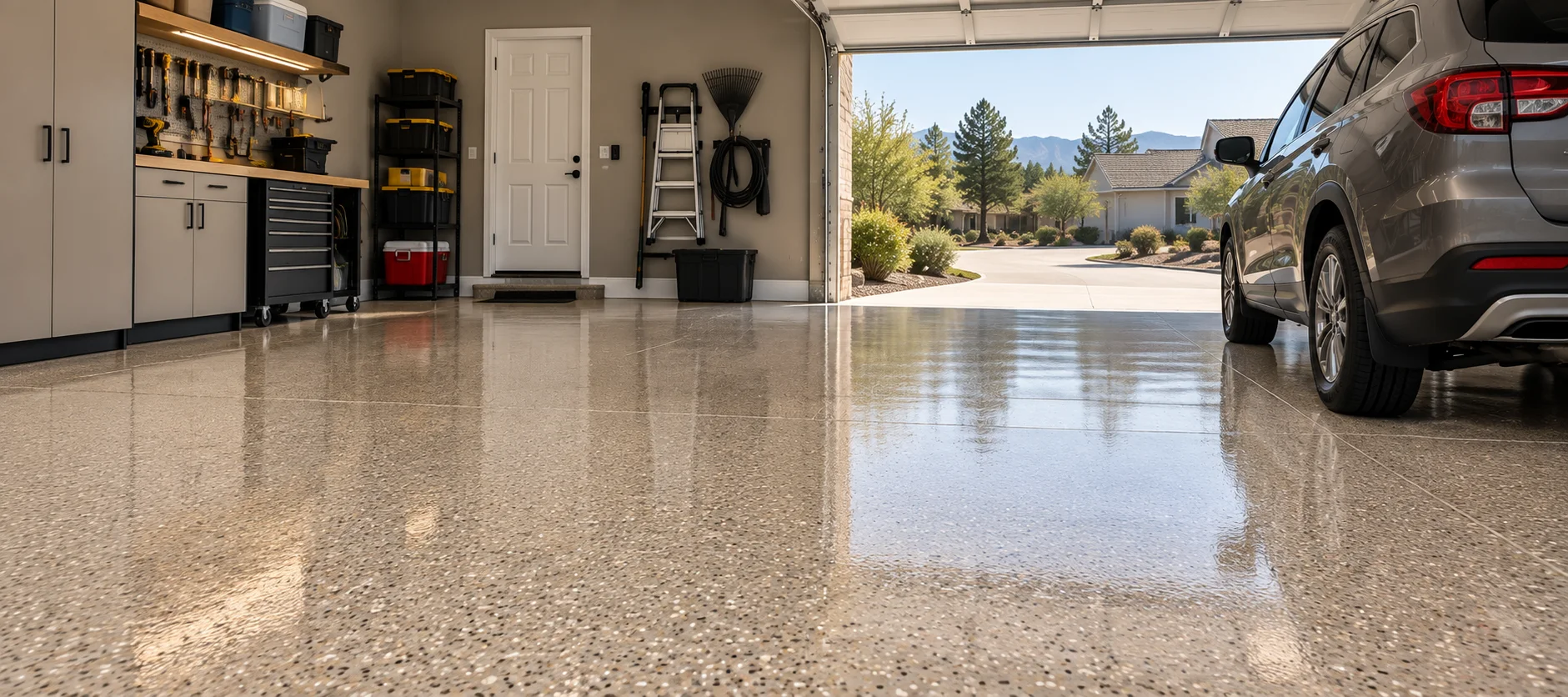
Garage floor epoxy colors and finishes
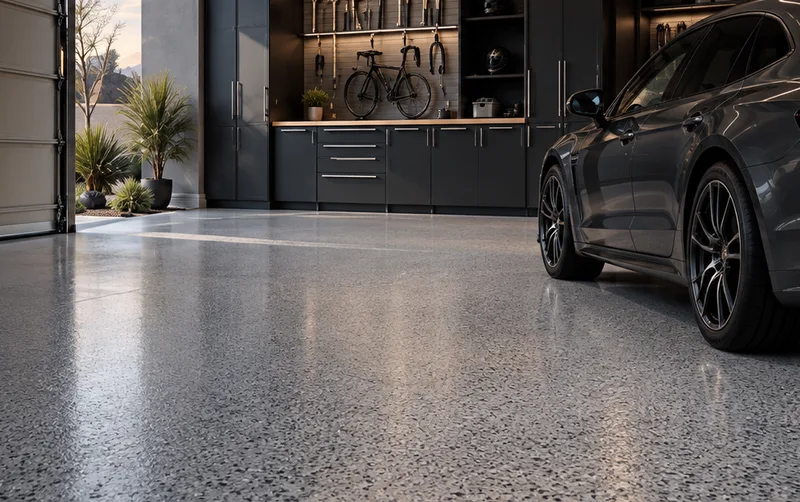
Most coated home garages get a full flake finish: dense, multicolor chips sealed under a clear topcoat. Solid color and metallic finishes are other options, each with its own look, upkeep and price.
Here is how the finishes compare and how flake size and color blend change the result.
- $6–$12 Per square foot, a typical planning range for a flake system with a polyaspartic finish
- $8–$15+ Per square foot, a planning range for metallic epoxy where a specialist installs it
- ¼ inch A common flake size. Smaller flakes look finer; larger flakes look bolder
Three looks, one floor to choose.
Full flake describes how the floor looks. The coating underneath can be epoxy, polyaspartic or a compatible combination, so ask each installer what their system is. Read more about epoxy garage floors and polyaspartic garage floors.
Partial flake, with scattered chips over a visible base color, is offered by some installers. Quartz, mica blends, borders and custom zones are specialty work.
-
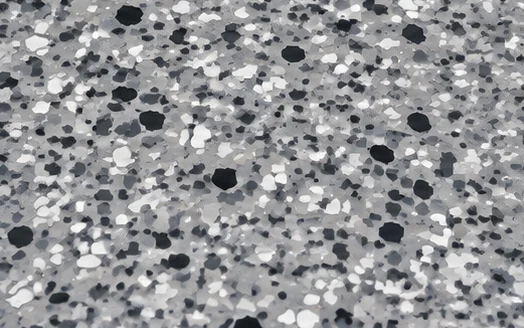 Most popular
Full flake
Dense multicolor chips cover the base coat completely. Textured, forgiving and the most common garage finish.
-
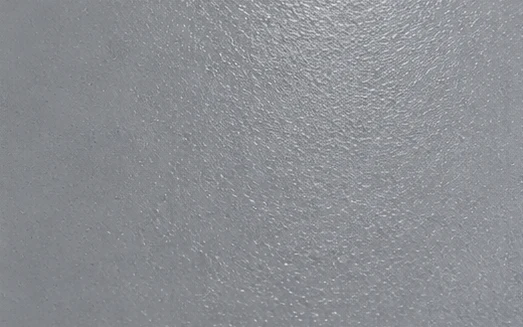 Simple
Solid color
One uniform color with a clean, bright look. It shows dust and tire marks more readily than flake.
-
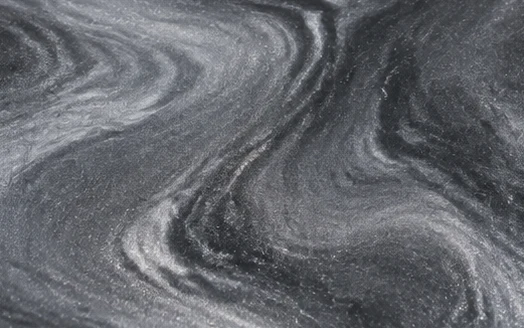 Specialty
Metallic
Flowing, marble-like effects made by hand. Available where a specialist installer works in your area.
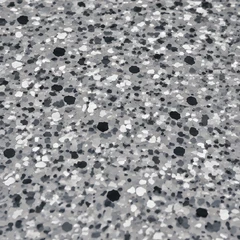
How flake size and color change the look
A ¼-inch flake is a common choice for garages. Smaller flakes give a finer, speckled look that reads almost like stone aggregate from a few feet away. Larger flakes look more graphic, with each chip easier to pick out.
The blend matters as much as the size. A mix of light, mid and dark chips tends to hide dust, tire marks and small scuffs between cleanings. A blend that is mostly one light or one dark tone shows more. Coverage matters too: a full broadcast hides the base coat, while partial flake lets the base color show through.
Screens change color, so photos only go so far. Ask to see physical samples before you decide.
- Smaller flakes: finer, more uniform texture
- Larger flakes: bolder, more graphic pattern
- Mixed light and dark chips: hide everyday dirt best
- Full coverage: the base coat is fully hidden
Garage floor flake colors, shown as examples.
These photos are examples only. Actual blends depend on the installer and the products they carry. Common blend families include light gray, medium gray, charcoal, black and white, tan, and brown or earth tones, often with an accent blend or two. Standard colors are usually part of the package; custom blends may cost more.
-
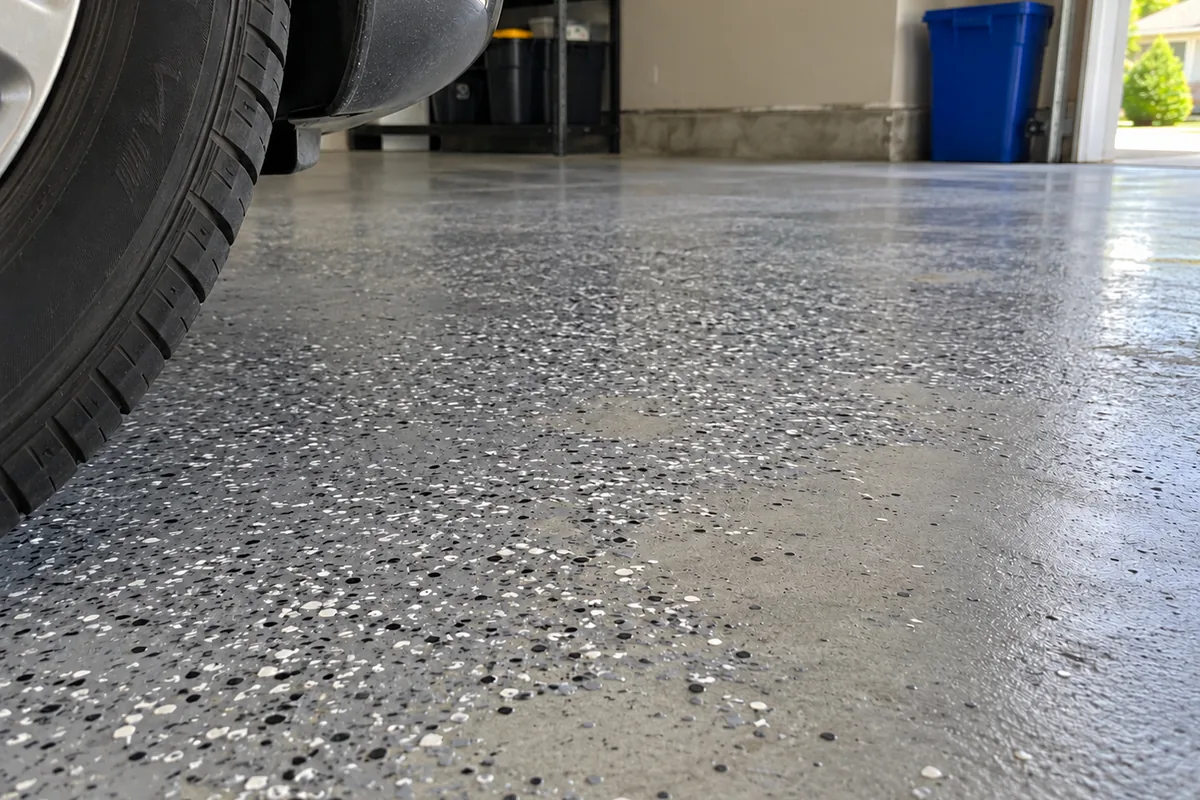 Example
Gray and black
A cool, mid-tone mix that suits most garages and hides everyday dust.
-
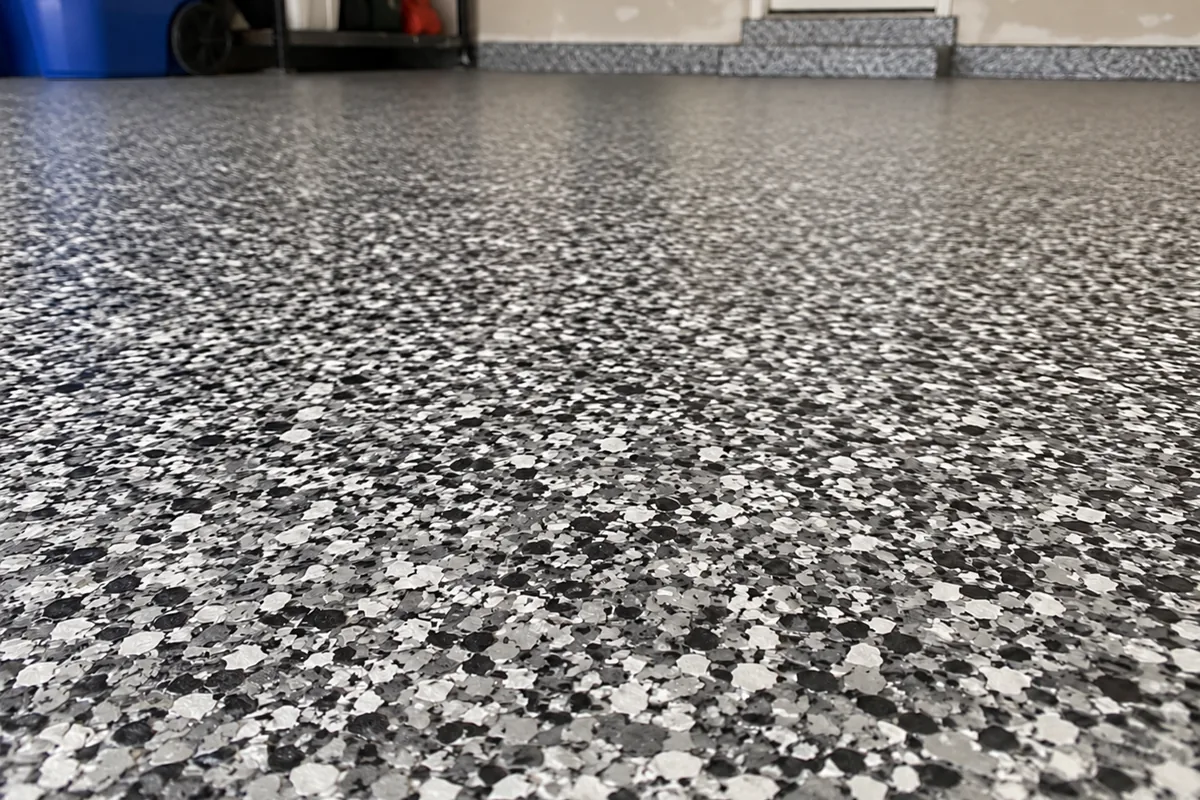 Example
Dense gray, high gloss
Full coverage under a glossy clear topcoat for a polished look.
-
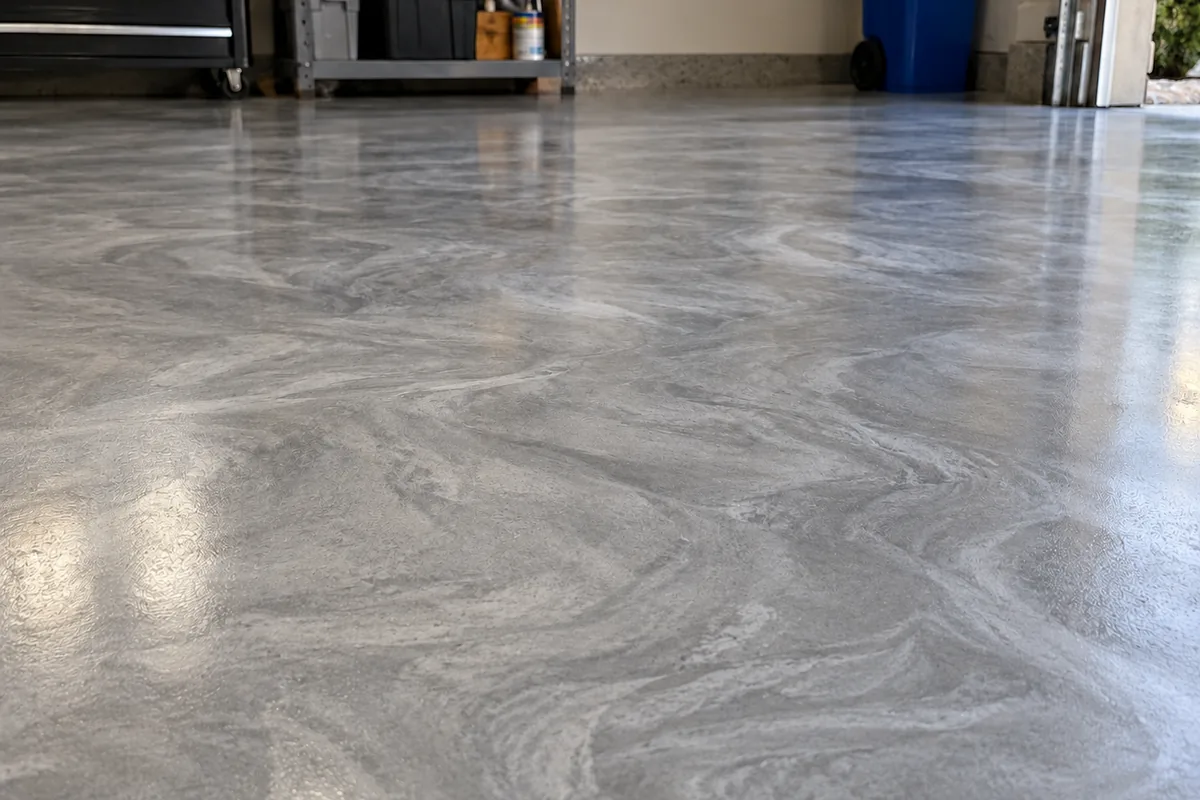 Example
Tan and earth tones
A warmer blend that pairs well with wood, brick and beige walls.
Garage floor finish options compared
Typical traits of each finish. Products and systems vary by installer, so confirm the details in your written estimate. See the full garage floor coating cost guide for what moves the price.
- Look
- Full flake
- Dense multicolor chips
- Partial flake
- Scattered chips over a visible base color
- Solid color
- One uniform color
- Metallic
- Flowing, marble-like effects
- Hides dirt
- Full flake
- Very well
- Partial flake
- Fairly well
- Solid color
- Shows more
- Metallic
- Shows more
- Texture and traction
- Full flake
- Some texture from the chips
- Partial flake
- Less texture between chips
- Solid color
- Smooth; can be slick when wet
- Metallic
- Smooth; can be slick when wet
- Color choice
- Full flake
- Stock blends from the installer
- Partial flake
- Base color plus a chip blend
- Solid color
- Single color
- Metallic
- Hand-made pattern; no two alike
- Planning range
- Full flake
- $6–$12 per sq ft with a polyaspartic finish
- Partial flake
- Ask the installer
- Solid color
- Ask the installer
- Metallic
- $8–$15+ per sq ft
- Availability
- Full flake
- Widely offered
- Partial flake
- Where the installer supports it
- Solid color
- Widely offered
- Metallic
- Where a specialist installer is available
These are planning ranges. Your quote depends on floor size, concrete condition, the coating system and your area.
Is a coated garage floor slippery?
Smooth coatings can be slippery when wet, and garages get wet from rain, snow and tracked-in water. Texture and additives improve traction. Flake chips add some texture on their own, and many installers can mix a fine grit into the topcoat for more grip.
Slip-resistant options are available with flake, solid and metallic finishes. Ask about traction near the door, on steps and anywhere the floor gets wet often, and match the texture to how you use the space.
- Ask which texture options the installer offers
- Ask how added grit changes the look and cleaning
- Consider more traction at entries and steps
Choosing a color and finish you will like
Start with how you use the garage. A space where you park daily and work on projects is easier to keep looking clean with full flake in a mixed blend. A showpiece garage or hobby room may suit metallic, if a specialist installs it near you.
Then look at real samples in your own garage light. Overhead bulbs, daylight from the door and wall color all change how a blend reads. Metallic patterns are made by hand, so expect your floor to share the style of a sample photo with its own pattern.
- Ask which blends the installer stocks as standard
- Ask for physical samples, and view them in your garage
- Ask whether a custom blend or specialty finish costs more
- Ask to see photos of their past metallic floors
Common questions about colors and finishes
Which colors are available?
It depends on the installer. Many carry flake blends in gray, charcoal, black and white, tan and earth tones, plus a few accent blends. Ask which blends they stock and look at physical samples, since screen colors can differ.
Can I choose a metallic floor?
Where a specialist installer is available. Metallic pricing, pattern expectations and installation differ from standard flake floors. The pattern is created by hand, so an exact copy of an inspiration photo is unlikely.
Is a coated garage floor slippery?
Smooth coatings can be slippery when wet. Texture and additives can improve traction, and slip-resistant options are available. Ask the installer what they offer for your floor.
Will the floor turn yellow?
Many conventional epoxy formulations can discolor with sunlight exposure. Some topcoats, including suitable polyaspartic formulations, are made to resist UV. If your garage gets direct sun, ask the installer about the UV performance of their complete system.
How do I clean it?
Follow the care instructions for your floor's products. Routine sweeping or dust mopping and a cleaner the installer approves are common starting points.
Do color choices cost extra?
Standard color choices are generally part of the package. Custom blends and specialty finishes may cost more. Ask the installer to list the finish and blend in your estimate.
See samples and pricing for your garage.
Tell us your ZIP and garage size. We will connect you with a local installation professional who can show you samples and give you an estimate for your floor.