Polyaspartic garage floor coating
Polyaspartic is a coating chemistry used in protective topcoats and some full floor systems. Suitable formulations cure fast and resist UV, which is why homeowners ask about it.
This guide covers what it does well, its limits, the two common system types, when you can use your garage again, and what to budget.
- $6–$12 Per sq ft, a planning range for a flake system with a polyaspartic finish
- 1 day Some systems allow one-day installation, depending on your floor
- 4 milestones Install done, foot traffic, vehicle traffic and full cure each come at a different time
What polyaspartic is
Polyaspartic is a type of coating chemistry within the broader polyurea category. Performance varies by formulation, so the product name alone tells you little.
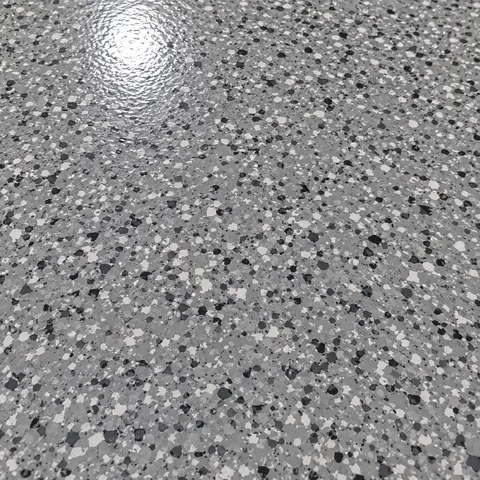
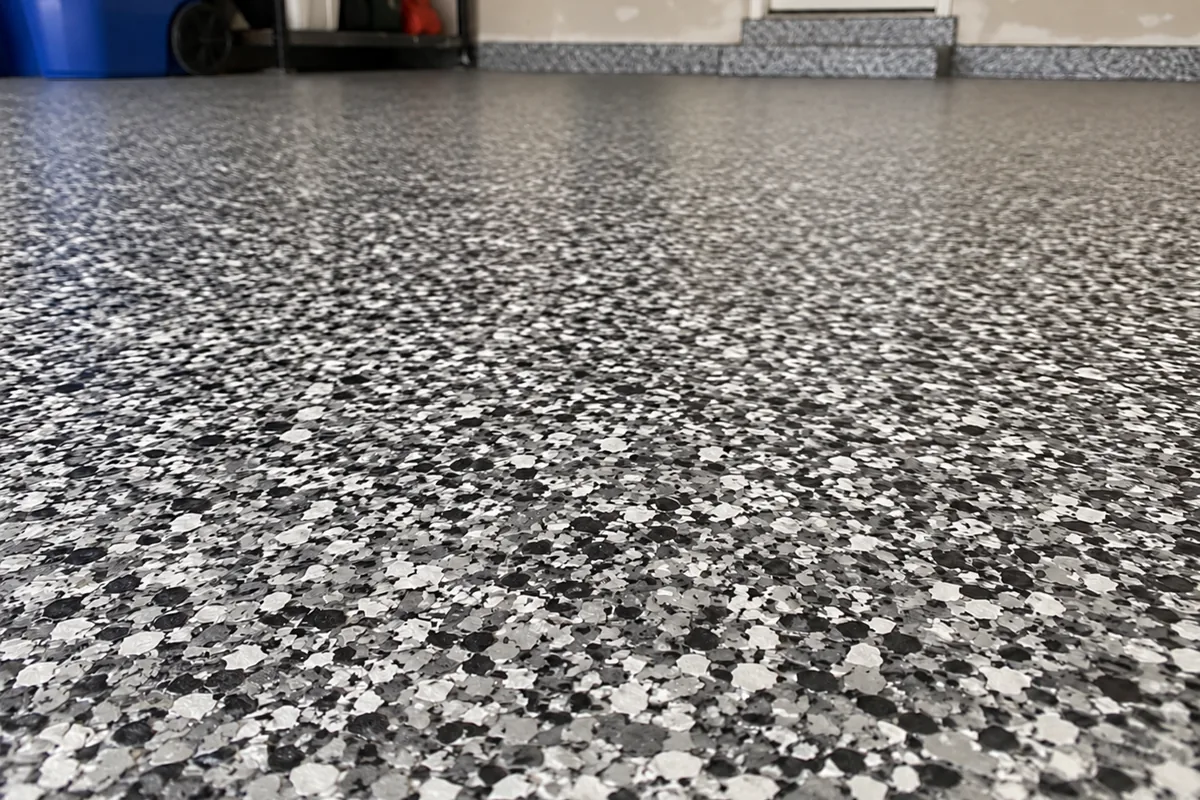
On a garage floor it often serves as the clear protective topcoat over decorative flake. Some installers also use suitable polyaspartic products for the base coat, which makes the whole floor polyaspartic.
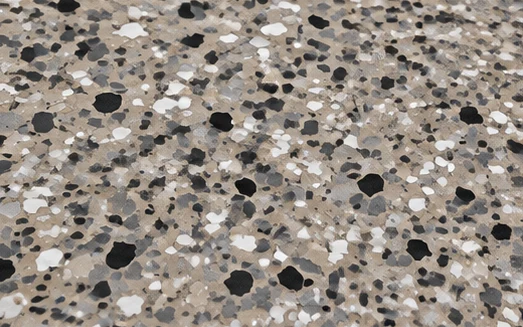
The look comes from what goes with it: full flake, partial flake or solid color. A polyaspartic floor can look just like the flake floors in our epoxy garage floors guide.
Some installers treat polyaspartic as an upgrade. Others use it as their standard system. Ask which layers each quote includes.
- A coating chemistry, part of the polyurea family
- Common as the clear topcoat over flake
- Used as the base coat in some systems
- Standard for some installers, an upgrade for others
What polyaspartic does well.
Each benefit depends on the exact product and the full system it sits in. Use the checklist on each card as questions for the installer.
-
 Speed
Fast curing
Appropriate formulations cure fast, so some systems allow one-day installation and a shorter wait to use the garage.
- Ask how long their full system takes
- Repairs and moisture treatment can add days
-
 Sun
UV resistance
Suitable polyaspartic topcoats are made to resist UV. Many conventional epoxies can discolor in sunlight.
- Ask about UV performance for the whole system
- Matters most if your door is open a lot
-
 Topcoat
Works over epoxy
A polyaspartic topcoat can go over a compatible epoxy base. Many hybrid systems are built this way.
- Layers must be compatible
- Ask which product is in each layer
-
 Finish
Flake finishes
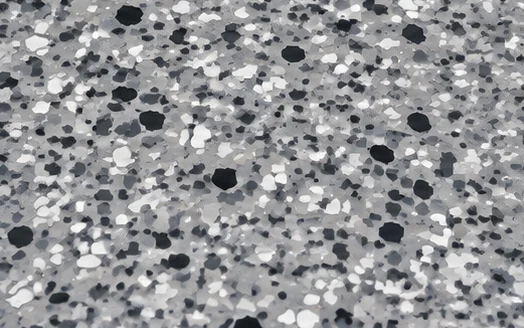
Polyaspartic is most often paired with full flake, sealed under a clear topcoat. It also works with partial flake and solid color.
- Review physical samples
- Ask about slip-resistant texture options
All-polyaspartic vs epoxy base + polyaspartic topcoat
Both are common, and both can look the same once the flake is down. They are different systems, so make sure each quote says which one you're getting. For the wider comparison, see epoxy vs polyaspartic.
- What it is
- All-polyaspartic
- Suitable polyaspartic products in the base coat and the topcoat
- Epoxy base + polyaspartic topcoat
- A hybrid: an epoxy primer or base coat, with a compatible polyaspartic topcoat
- Install time and return to use
- All-polyaspartic
- Fast-curing layers; some systems allow one-day installation
- Epoxy base + polyaspartic topcoat
- Depends on the epoxy base's cure schedule; ask how many days the job takes
- UV exposure
- All-polyaspartic
- Appropriate formulations resist UV
- Epoxy base + polyaspartic topcoat
- The polyaspartic topcoat is the layer facing the sun; verify the whole system's UV performance
- Moisture treatment
- All-polyaspartic
- If the slab needs it, a moisture-mitigation primer may be added, and some are epoxy products
- Epoxy base + polyaspartic topcoat
- The epoxy base or primer can be part of the moisture plan where the slab needs it
- Typical use
- All-polyaspartic
- Homeowners on a tight timeline, or installers who use it as standard
- Epoxy base + polyaspartic topcoat
- A common professional system for flake floors
General traits only. Cure times, UV performance and return-to-use dates depend on the products, the installer's system, your slab and the weather.
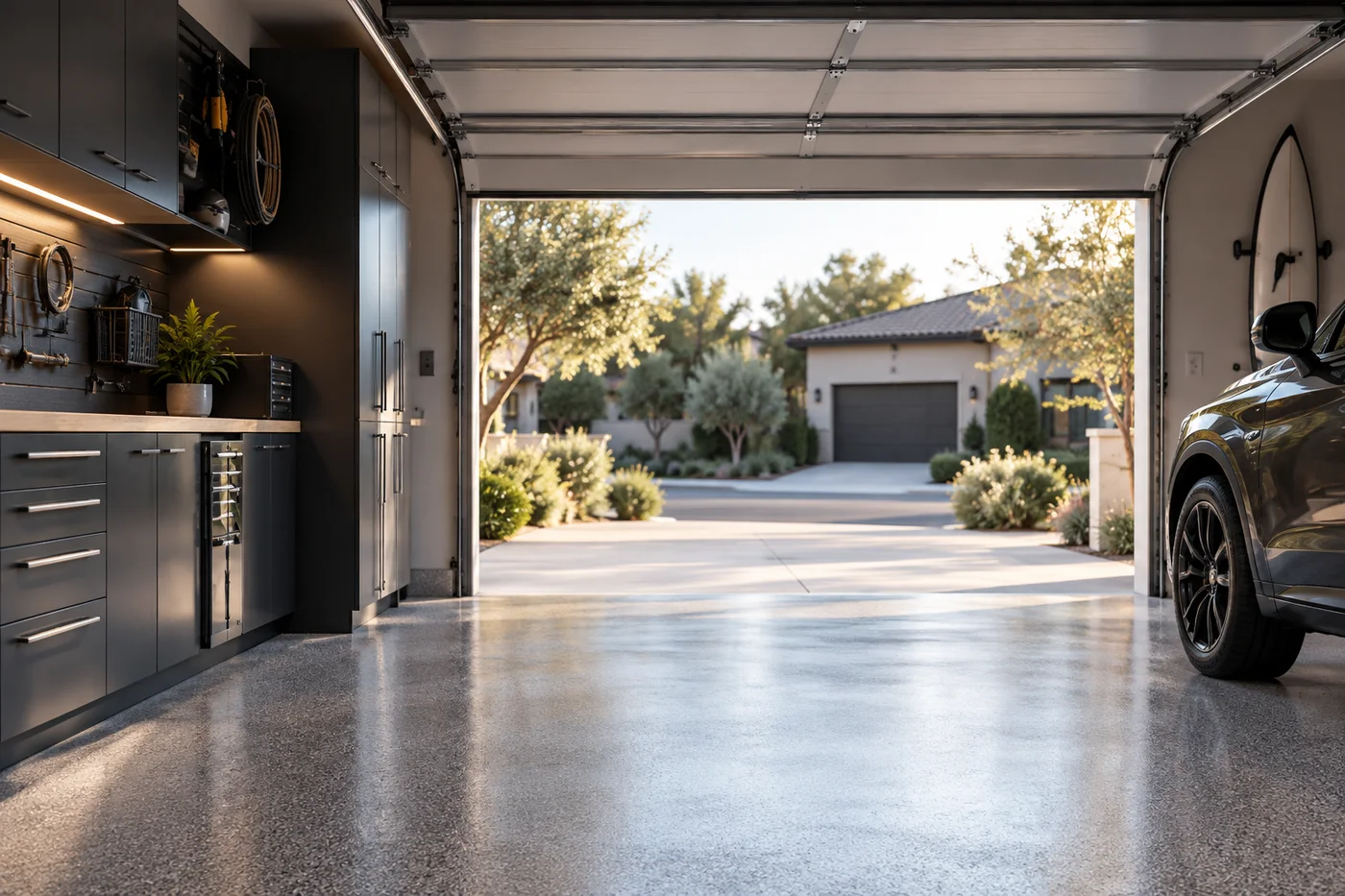
Four milestones, four different times
A one-day install gets you a finished-looking floor fast. The floor still reaches walking, parking and full cure at separate times. Your installer's written instructions set each date for their products, so get them in writing before the job starts.
-
Installation complete
The last coat is down and the crew is done. Keep everyone off until the installer says otherwise.
-
Foot traffic
Walking on the floor comes next. Ask when, and whether socks or clean shoes are best at first.
-
Vehicle traffic
Parking usually comes later than walking. Hot tires, heavy vehicles and jacks put more load on a new coating.
-
Full cure
The coating reaches its full properties. Ask when cleaners, chemicals and heavy use are fine.
What polyaspartic can't fix
Concrete condition, preparation, moisture treatment, compatible layers, thickness, cure schedule and workmanship all decide how the floor performs.
Fast curing shortens the time the installer has to work each coat, so experience with the product matters. Ask how many polyaspartic floors they have installed.
A coating does not fix structural movement, drainage problems or water intrusion. Active moisture or moving cracks need assessment first, and that work may be quoted separately.
- Prep and grinding still decide how well it bonds
- Moisture, oil and old coatings can cause failures
- Smooth coatings can be slippery when wet
- Warranty terms vary by installer
- Repairs and moisture treatment can add time
Planning ranges by floor area
A decorative flake system with a polyaspartic finish, or a suitable all-polyaspartic system, is commonly planned at about $6–$12 per square foot installed. That range does not mean every hybrid and all-polyaspartic system is priced the same. These are planning ranges, not quotes. See the full garage floor coating cost guide for what moves the number.
Directional installed budgets only, not quotes. Prices vary by region, floor condition, coating system and finish.
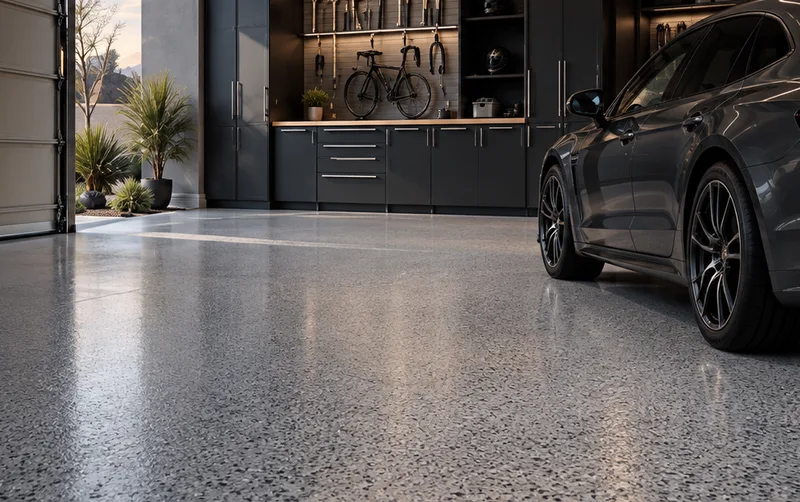
Old coating removal, crack repair and moisture treatment are what usually push an estimate up.
Request an Estimate — 500 sq ftPolyaspartic floor questions
Is polyaspartic better than epoxy?
Polyaspartic can offer fast curing and UV-resistant finishes. The right system depends on your slab, how you use the garage, moisture and the installation. Compare them in epoxy vs polyaspartic.
Can a polyaspartic garage floor be done in one day?
Some systems allow one-day installation. Crack repairs, moisture treatment, old coating removal and some systems can take more time. Even after a one-day install, the floor reaches full cure later.
When can I park on a polyaspartic floor?
Installation completion, foot traffic, vehicle traffic and full cure are different milestones. Follow the installer's written instructions for their products, and get those instructions before the job starts.
Will hot tires damage it?
Ask the installer to confirm the actual product is suitable for garage traffic, and check what the written warranty covers.
Is a polyaspartic floor slippery?
Smooth coatings can be slippery when wet. Slip-resistant options are available: suitable texture and additives can improve traction. Ask which options fit how you use the space.
How much does a polyaspartic garage floor cost?
A common planning range is about $6–$12 per square foot installed, or about $3,000–$6,000 for a 500 sq ft floor. Your price depends on area, system, prep and local pricing. See the cost guide.
Is an epoxy base with a polyaspartic topcoat a polyaspartic floor?
It is a hybrid system. An all-polyaspartic floor uses suitable polyaspartic products in the base coat as well. Both are common, so ask each installer which one their quote covers.
Is polyaspartic the same as polyurea?
Polyurea is a broader chemistry category, and polyaspartic falls within it. Performance varies by formulation, so the name alone is not enough to compare floors. Ask which products go in each layer.
Request a Local Estimate
Tell us about your garage and we'll connect you with a local installation professional. They can inspect your slab, recommend an all-polyaspartic or hybrid system, and put the return-to-use schedule in writing.